
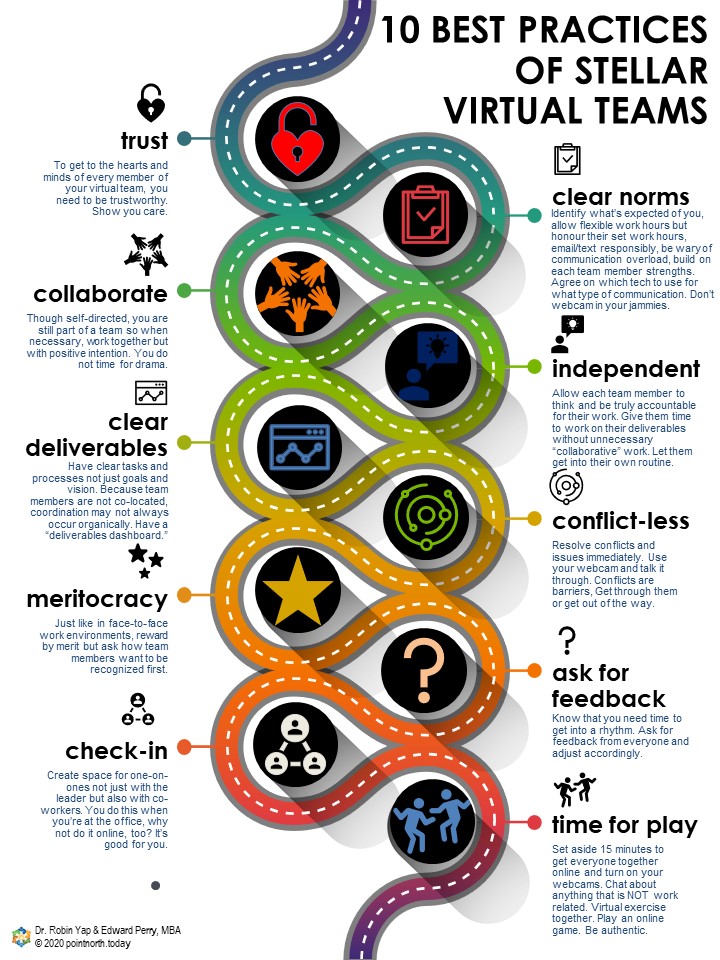
10 Best Practices:
- Trust. To get to the hearts and minds of every member of your virtual team, you need to be trustworthy. Show you care.
- Clear norms. Identify what's expected of you, allow flexible work hours but honour their set work hours, email/text responsibly, be wary of communication overload, build on each team member strengths. Agree on which tech to use for what type of communication. Don't webcam in your jammies.
- Collaborate. Though self-directed, you are still part of a team so when necessary, work together but with positive intention. You do not have time for drama.
- Independent. Allow each team member to think and be truly accountable for their work. Give them time to work on their deliverables without unnecessary "collaborative" work. Let them get into their own routine.
- Clear deliverables. Have clear tasks and processes not just goals and vision. Because team members are not co-located, coordination may not always occur organically. Have a "deliverables dashboard".
- Conflict-less. Resolve conflicts and issues immediately. Use your webcam and talk it through. Conflicts are barriers. Get through them or get out of the way.
- Meritocracy. Just like in face-to-face work environments, reward by merit but ask how team members want to be recognized first.
- Ask for feedback. Know that you need time to get into a rhythm. Ask for feedback from everyone and adjust accordingly.
- Check-in. Create space for one-on-ones not just with the leader but also with co-workers. You do this when you're at the office, why not do it online, too? It's good for you.
- Time to play. Set aside 15 minutes to get everyone together online and turn on your webcams. Chat about anything that is NOT work related. Virtual exercise together. Play an online game. Be authentic.
Tags: remote work team building team norms virtual teams virtual work
Share | Facebook X Email LinkedIn Permalink | Comments (0)